MedBeacon
A sepsis alert clinicians can trust
In testing, it caught as many sepsis cases as standard scoring rules, with about a third fewer false alarms.
- My role
- Cofounder, Product and Technology
- Years
- 2021–2026
- Built for
- Hospitals on Oracle Health (Cerner) Millennium
- Platforms
- iOS, PowerChart, web
- Company
- MedBeacon, Inc. (formerly Health Apogee), a team of fewer than five
- Built with
- AWS (EKS, Bedrock) and MongoDB Atlas
The problem
About one in three patients who die in a US hospital has sepsis,1 and each hour of delayed treatment is linked to a higher risk of death.2 Alerts built on standard scoring rules typically use only vital signs and lab values, so they leave out clinical notes, which have been shown to improve early sepsis prediction.3
What we built
An AI sepsis detection and alerting platform for hospitals running Oracle Health (Cerner) Millennium. Its core idea was “Silent Sepsis” detection: generative AI read nurse notes to catch patients whose vital signs still looked normal but whose charting suggested they were declining. Threshold-based rules missed those cases, so MedBeacon paired the AI with the clinical rules behind standard sepsis alerts. Behind it, a HIPAA-eligible AWS architecture on EKS, MongoDB Atlas, and Amazon Bedrock, with business associate agreements (BAAs) in place for the cloud and the database.
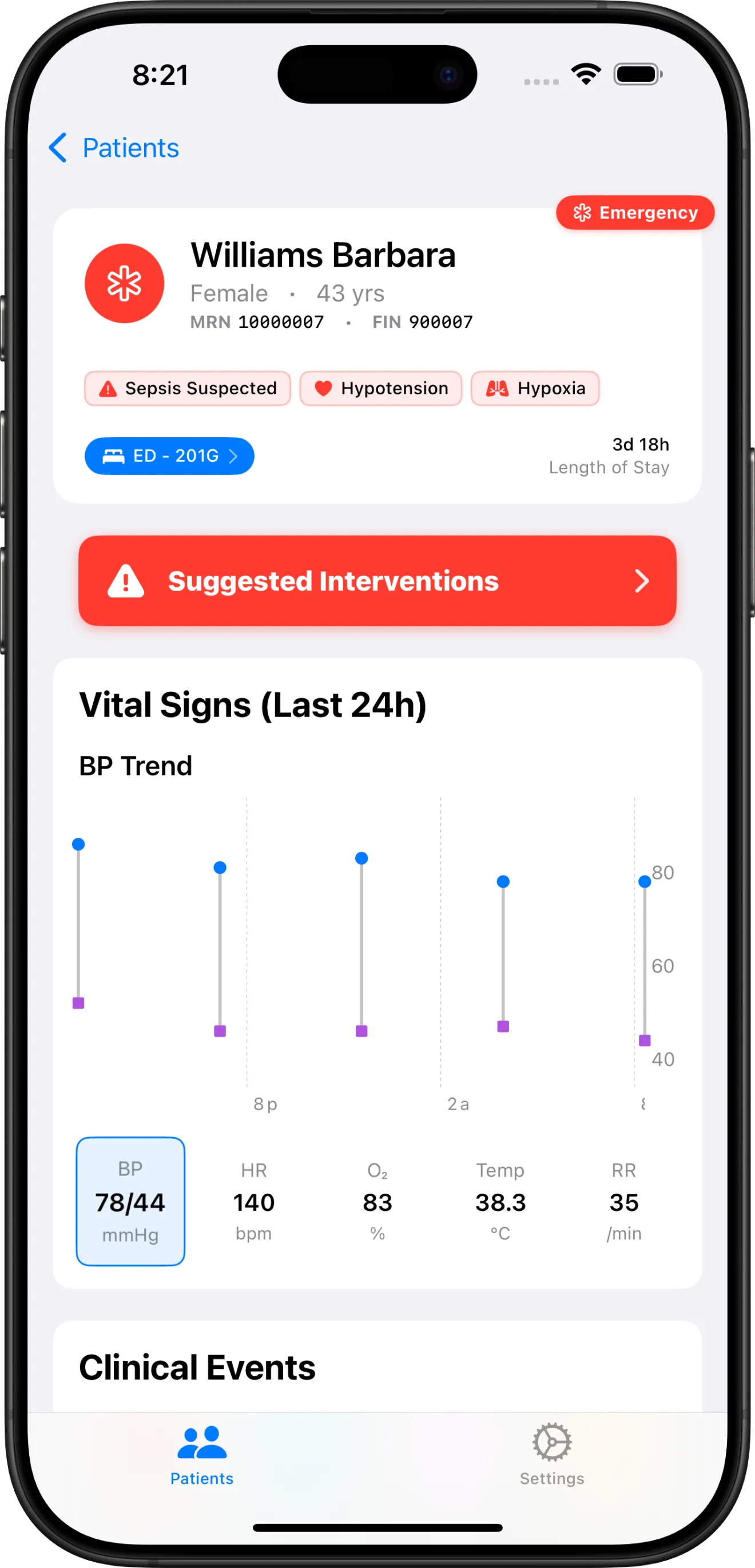
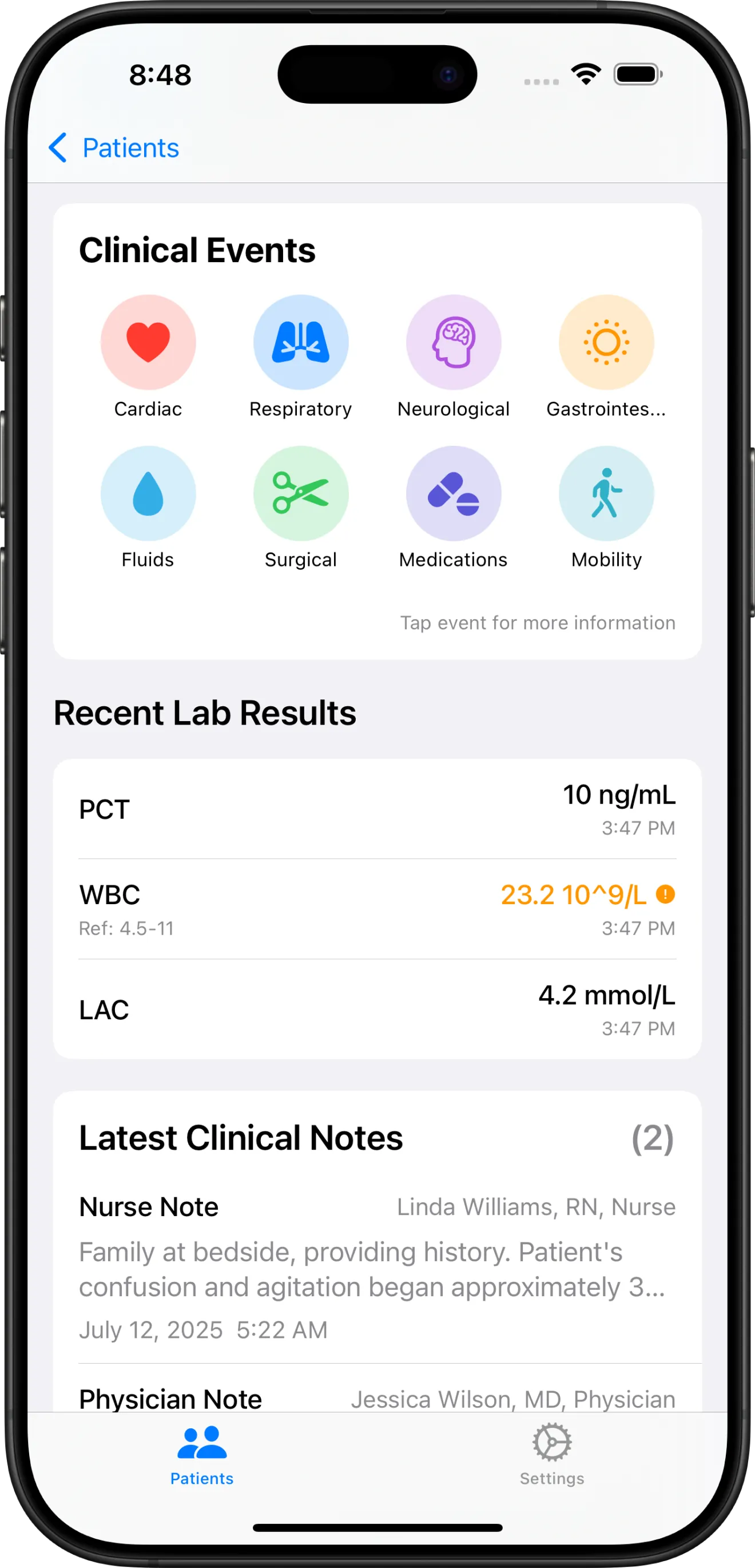
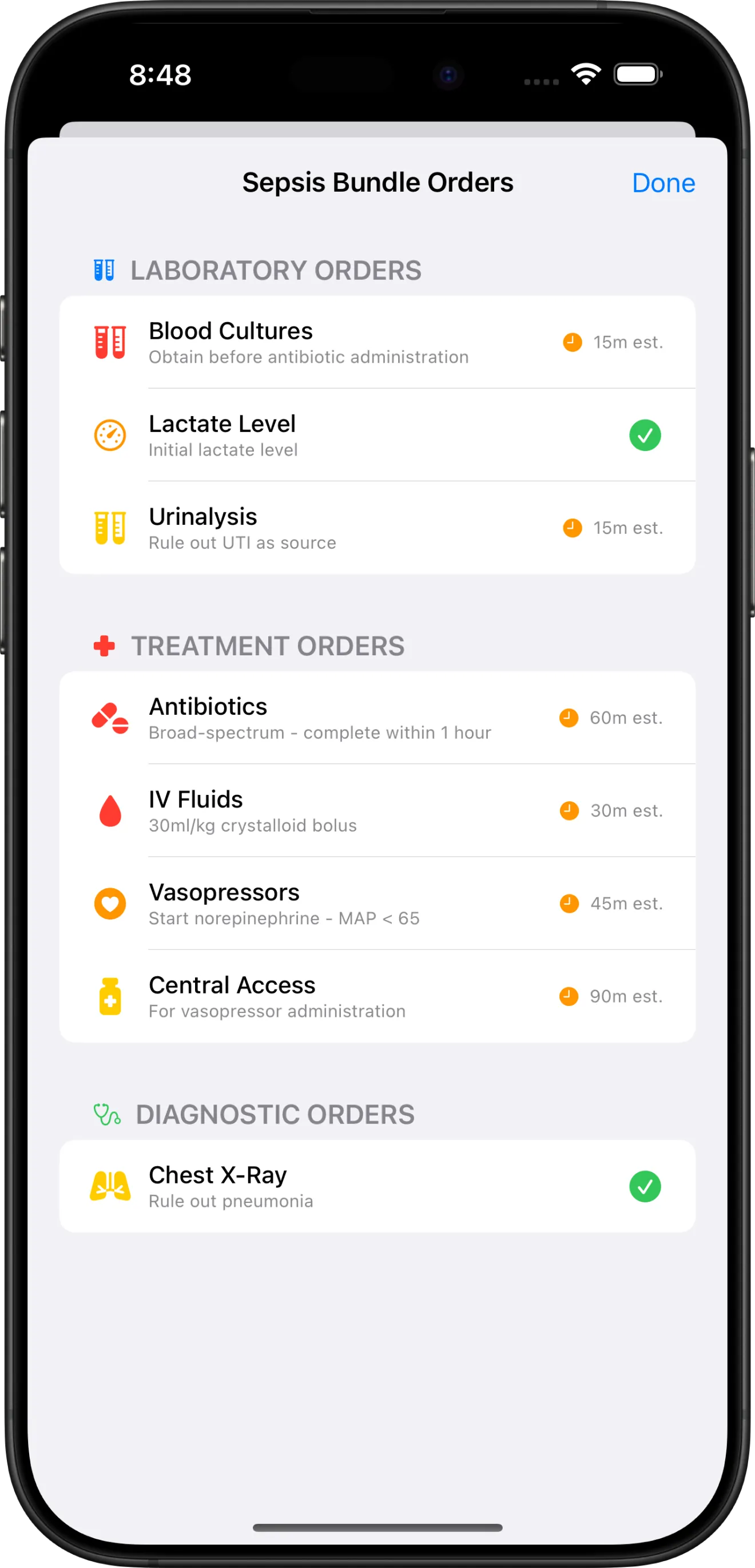
MedBeacon Mobile, a native iOS app for clinicians on the move
MedBeacon Integrated, inside PowerChart, where clinicians already work
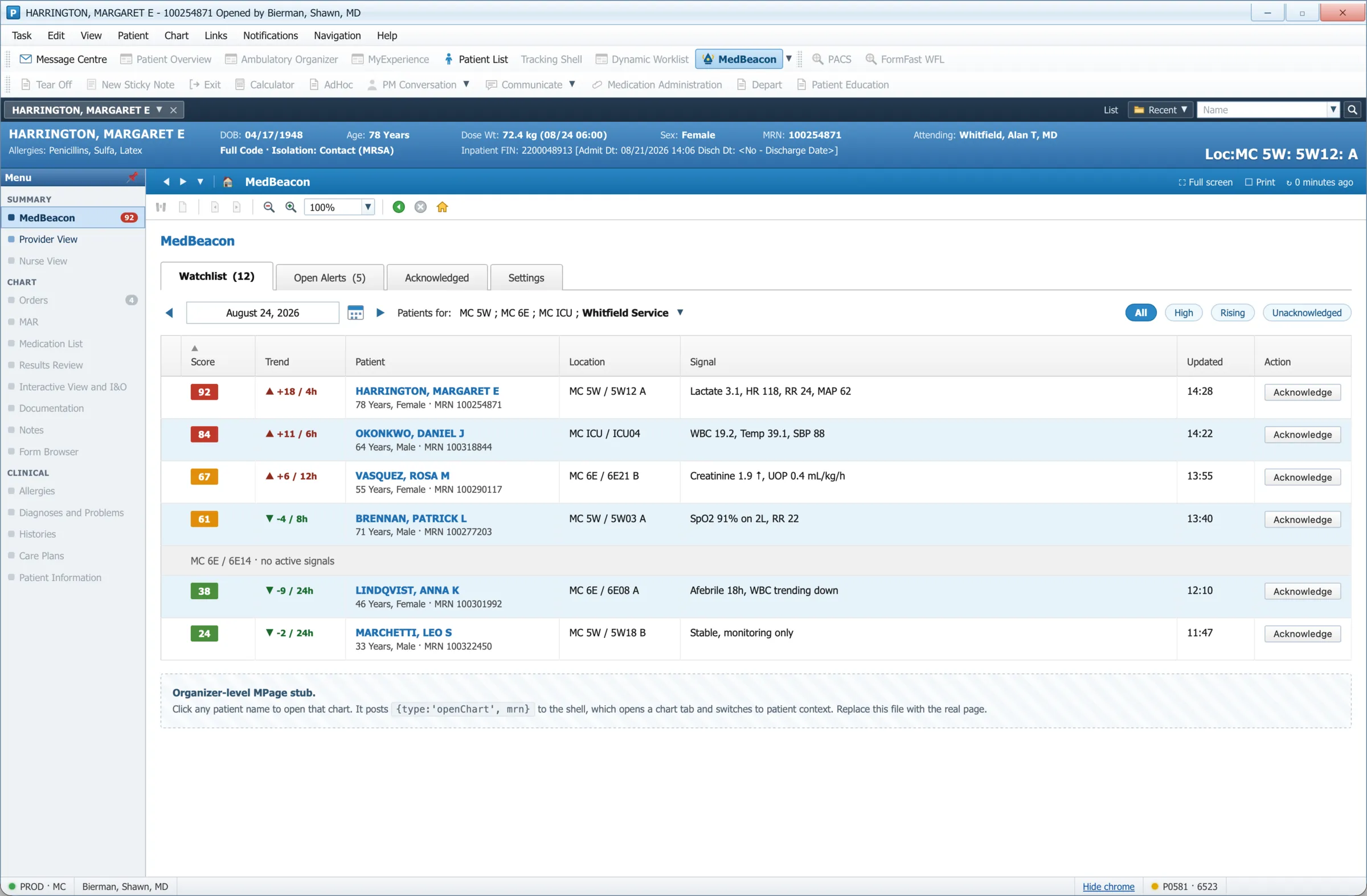
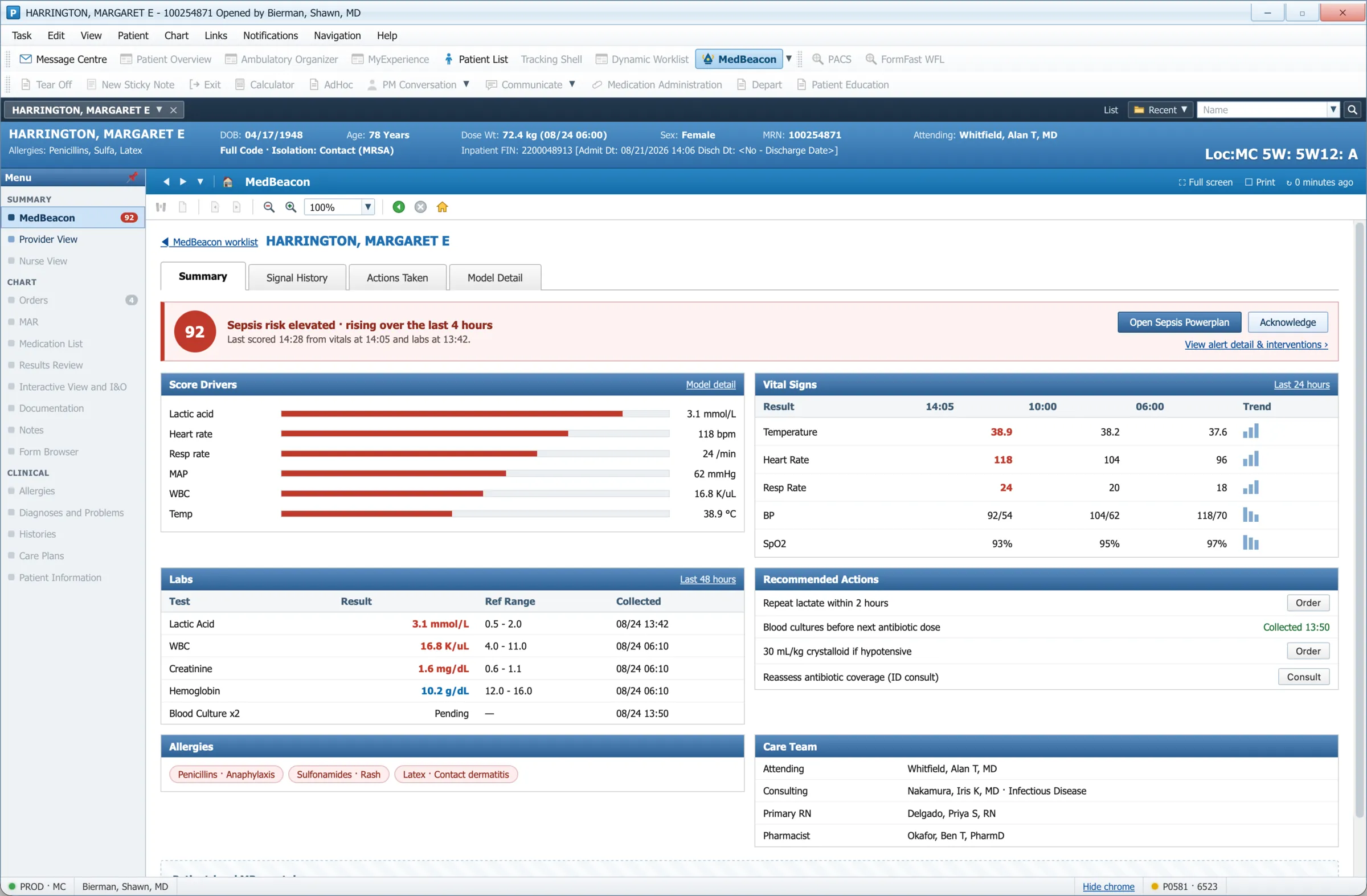
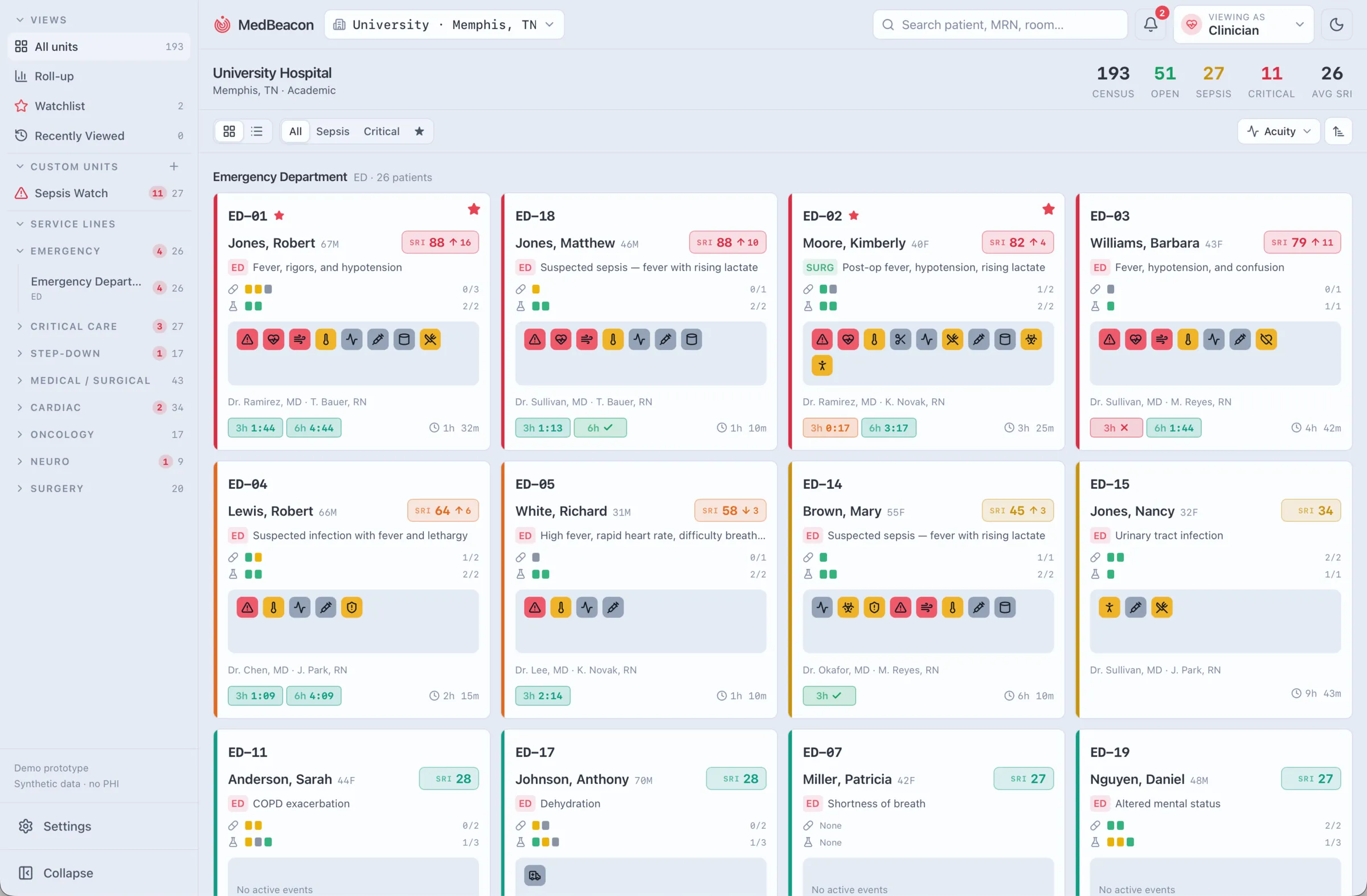
MedBeacon Desktop, a census board with a unit-wide view of risk
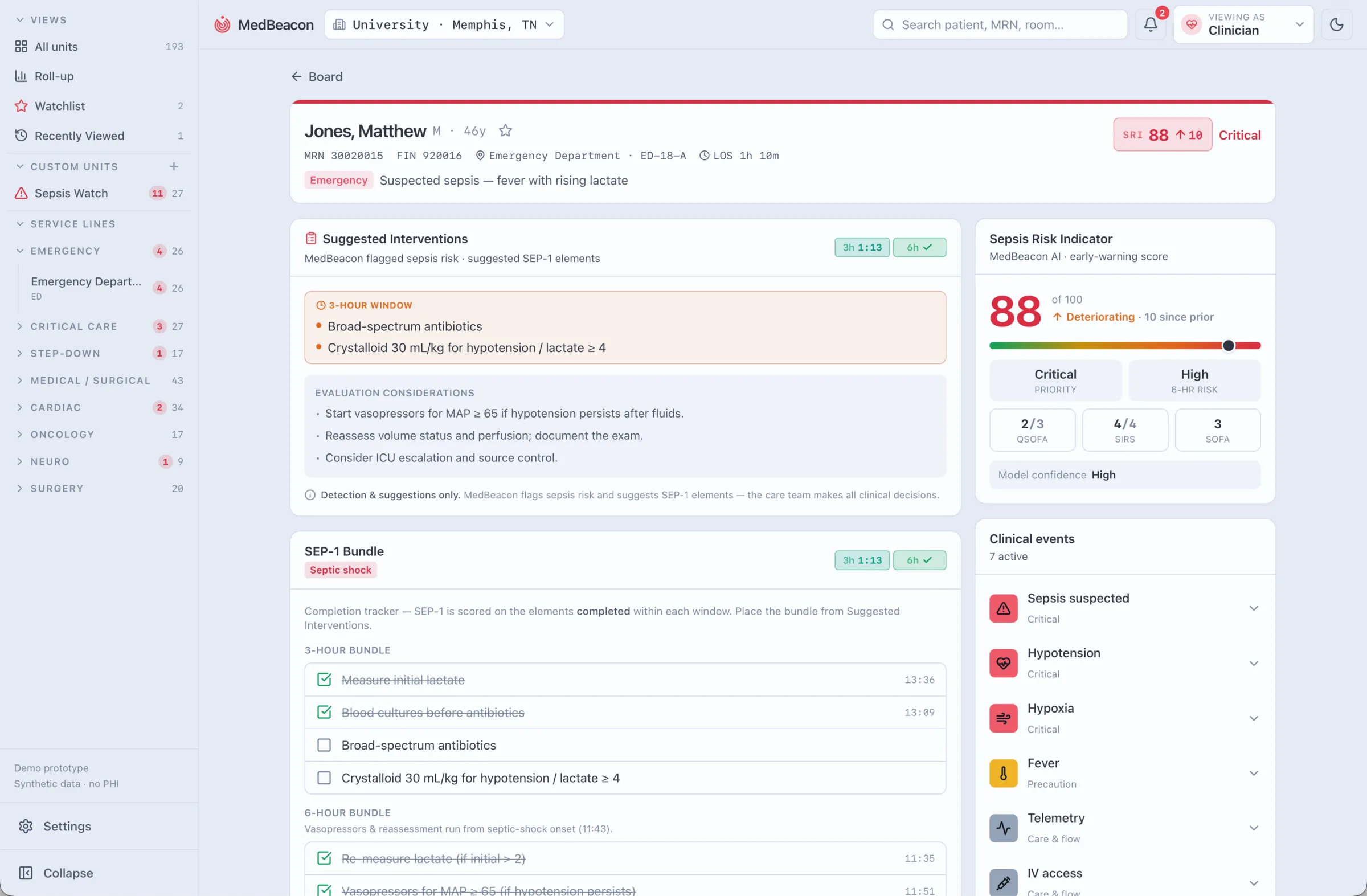
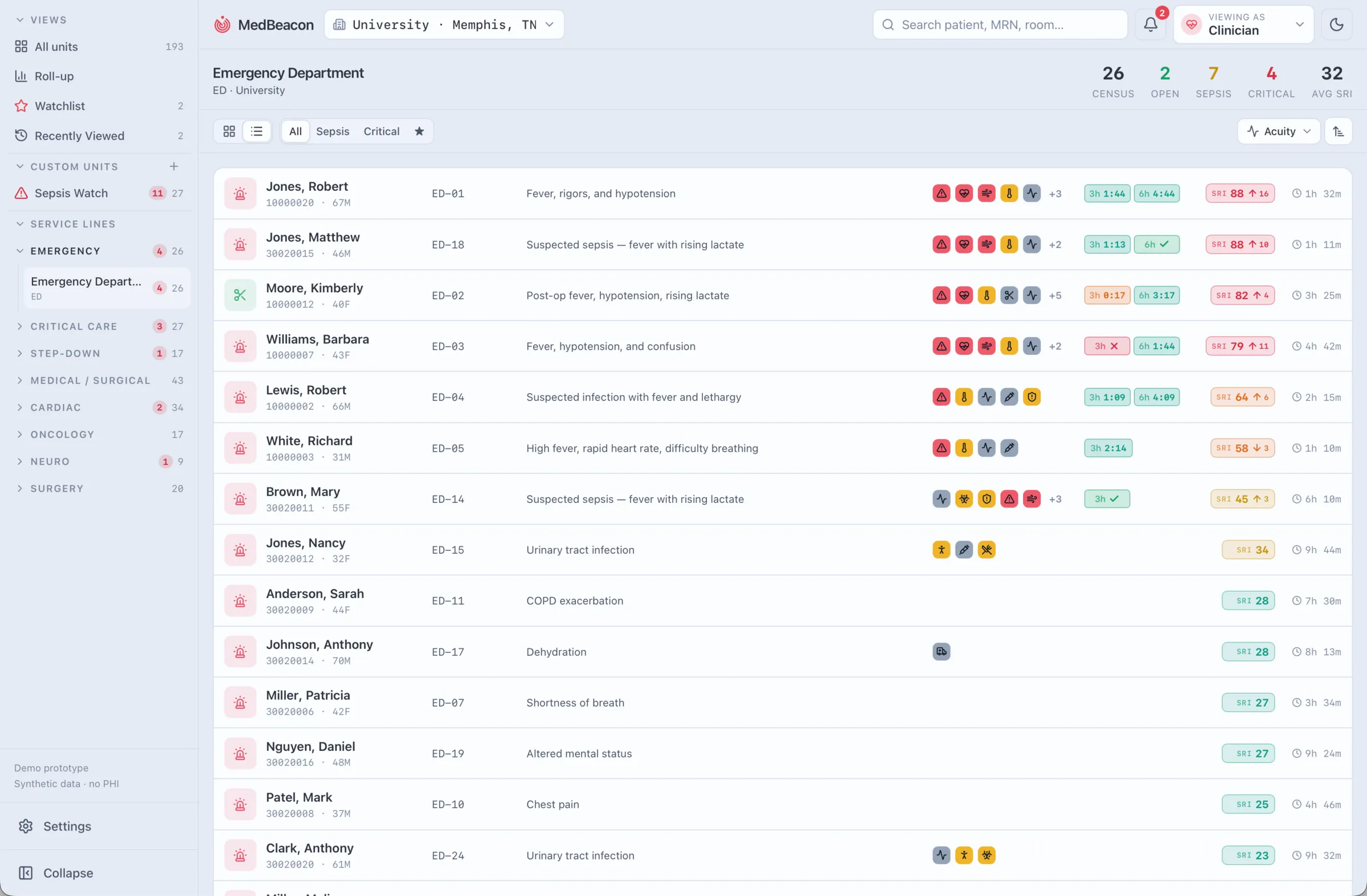
All screens show demo data with made-up patients.
My part
What I did
- Shaped what the product should be, with our Chief Product Officer.
- Designed the workflows and user experience.
- Prototyped every demo on all three surfaces.
- Directed three outsourced engineering teams of up to five, delivering all Phase 1 deliverables on a $150K fixed-fee build and scoping a $250K follow-on.
- Governed the AWS architecture: approved the stack and executed the cloud and database BAAs.
- Built HIPAA security and access governance, including least-privilege contractor access, required security checks on code, and quarterly access reviews.
- Led the Cerner Millennium integration partnerships, from vendor evaluation and selection through technical issue resolution.
- Built a SEP-1 Prospect Finder that ranks 4,600+ U.S. hospitals by public CMS sepsis bundle compliance, to target sales outreach.
- Reported to the CEO and board.
What others did
- Our Chief Product Officer shaped the product with me.
- Outsourced engineering teams developed and maintained the platform.
Results
Tested on 150 ICU patients from a public research database (eICU-CRD), using each patient’s data as it stood 6 hours before diagnosis.4
| Approach | Sepsis cases caught | False-alarm rate |
|---|---|---|
| Standard scoring rules | 74% | 57% |
| AI alone | 82% | 70% |
| AI plus clinical rules | 82% | 37% |
Notes
- Rhee C, et al. “Incidence and Trends of Sepsis in US Hospitals Using Clinical vs Claims Data, 2009–2014.” JAMA. 2017;318(13):1241–1249. Sepsis was present in 35% of hospital stays that ended in death. doi.org/10.1001/jama.2017.13836
- Seymour CW, et al. “Time to Treatment and Mortality during Mandated Emergency Care for Sepsis.” N Engl J Med. 2017;376:2235–2244. Each hour of delay before antibiotics were given or the 3-hour treatment bundle was completed was associated with higher in-hospital mortality (odds ratio 1.04 per hour). doi.org/10.1056/NEJMoa1703058
- Goh KH, et al. “Artificial intelligence in sepsis early prediction and diagnosis using unstructured data in healthcare.” Nat Commun. 2021;12:711. Adding clinical notes improved accuracy over clinical measures alone for warnings 12 to 48 hours before sepsis onset. doi.org/10.1038/s41467-021-20910-4
- Patients from the eICU Collaborative Research Database Demo v2.0.1 (doi.org/10.13026/4mxk-na84), described in Pollard TJ, et al., Sci Data. 2018;5:180178 (doi.org/10.1038/sdata.2018.178). The results come from MedBeacon’s internal validation in May 2026 and have not been published. Of the 150 patients, 34 had sepsis. The 95% confidence intervals are roughly ±10–15 points on the share of cases caught.